Best 49-Key Controllers
49 keys is the first size that plays like an instrument rather than a shortcut: four octaves is enough room for real left-hand and right-hand parts without turning your desk into a piano bench. This is the size most home producers settle on, so the buying question shifts from "does it fit" to build quality, key feel, and how much of the software you use gets deep DAW integration out of the box.
11 49-key controllers tracked, prices checked weekly by Elan Harpaz.
Buying guides
All 11 49-key controllers
Ordered by our own picks first, then by whether the listing is the thing this category is named after rather than an accessory for it, then by Amazon rating weighted by review count.

Arturia KeyLab Essential mk3 — 49 Key USB MIDI Keyboard Controller with Analog Lab V Software Included
Observed
Best for: A beginner who wants pads, knobs, and a bundle of real sounds from day one.

Novation Launchkey 49 MK4 USB MIDI Keyboard Controller
Observed
Best for: Producers working inside Ableton, Logic or FL Studio who want the controller to double as a real mixer and clip launcher.

Arturia KeyLab mk3 USB MIDI Keyboard Controller, 49 Key - White
Observed
Best for: A keys player who wants aftertouch and the most control surface in the lineup.

M-AUDIO Keystation 49 MK3 USB MIDI Controller
Observed
Best for: A first controller that's just 49 keys and nothing else to learn.


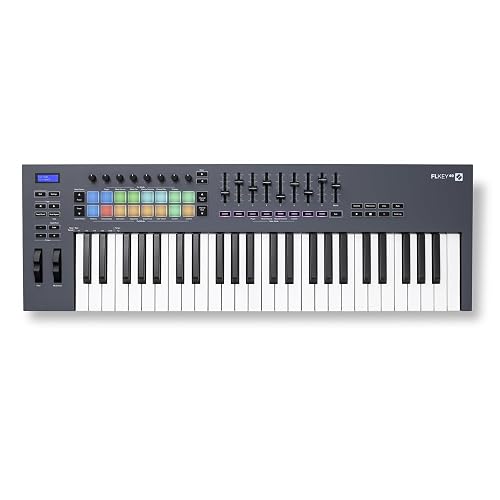

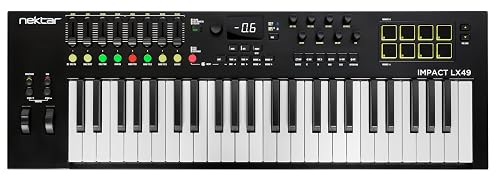


Native Instruments S-Series Komplete Kontrol S49 MK3 Keyboard Controller
Observed
Frequently asked questions
Is 49 keys enough for serious production?
For most producers, yes. Four octaves covers the range most parts actually use, and octave-shift buttons handle the rest. Only piano-focused players who want the full range under their hands at once tend to outgrow it.
What matters more, key feel or the number of controls?
Key feel, because you touch it on every session. A synth-action or semi-weighted 49-key controller with fewer knobs beats a control-heavy one with mushy keys, since most of those extra knobs get mapped once and forgotten.
Do I need deep DAW integration or just plain MIDI?
If you live in one DAW, Ableton, FL Studio or Logic, a controller built for it saves real setup time with mapped transport and mixer controls. If you move between hosts, a simpler class-compliant keyboard avoids fighting software you did not choose it for.